
— Identity-centred intelligenceReclaim the past.
Unlock the truth.
SARVAH connects fragmented evidence to reveal meaningful relationships between objects, people, places, events and sources.
— The problem
Fragmented information leads to incomplete understanding
Knowledge relating to works of art, cultural objects and the people connected to them is scattered across archives, catalogues, databases, publications, private collections and family histories.
Existing tools help users retrieve documents. They rarely show how those documents support, contradict or complement one another.
SARVAH does not simply retrieve information. It connects previously dispersed evidence to reveal meaningful relationships, reconstruct context and progressively build a richer, more firmly supported understanding.
— What is SARVAH?
An Identity-centred intelligence for cultural heritage.
An artwork, object, document or name takes on its full meaning through the relationships that connect it to other people, places, events and sources.
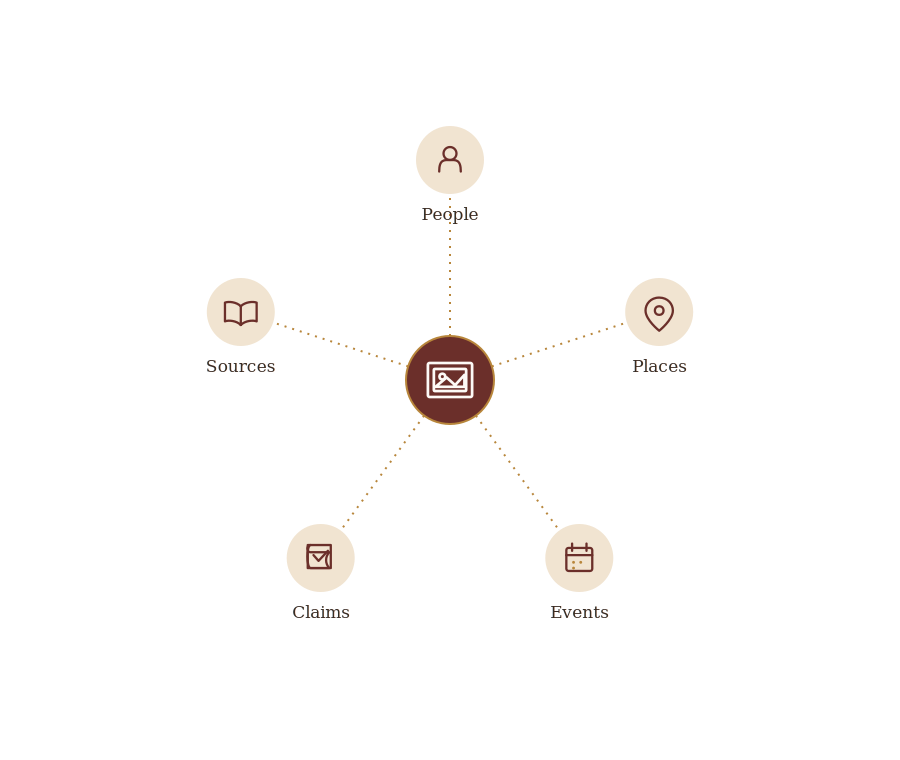
How it works
From evidence to the next question.
Evidence
Start with an object, a document, a name or a question. Each source keeps its origin.
Relationships
People, places, events and records are linked — each link with its source.
Hypotheses
Where sources disagree, competing claims stay side by side.
Questions
Gaps and contradictions become the next question to pursue.
Applications
Where connected evidence becomes useful.
— Meet QEST™
You do not need to know where to search.
Start with what you have.
Qest™ turns what you have into a structured investigation — connecting evidence, revealing gaps, and showing where the next meaningful question may lead.
"Traditional tools ask you to know where to search. Qest helps you understand what becomes worth searching next."
Investigate with SARVAH.
Have an object, collection, research question or body of evidence that is difficult to connect?
Explore Qest, or work with us to test where SARVAH can create real value.